Executive summary
A white-label ad platform, made to feel native in every market it launched in.
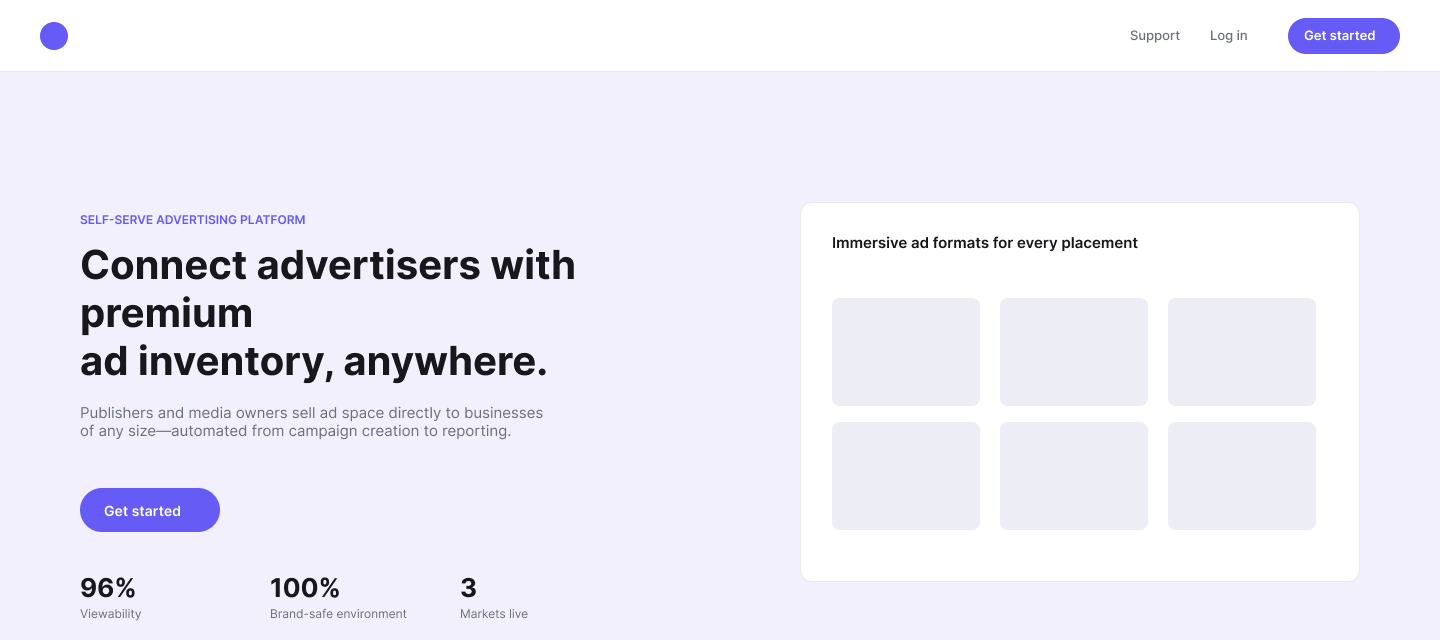
The platform lets publishers and media owners sell advertising space directly to advertisers of any size—automating campaign planning, creative production, payment and reporting into one workflow.
I joined as the design system matured from a single deployment into a true white-label product: one built to be re-skinned and re-configured for each new client without losing consistency or trust.
Over 11 months I led design across the core platform and three client deployments—working hands-on across research, UX and UI while owning workflow, reviews and design-system scalability.
01 · Problem and niche
A generic ad platform doesn’t feel safe to advertise on.
Self-serve advertising works when publishers and media owners can open premium ad space to businesses of any size—not just the largest brands with a dedicated sales team. But a platform built for one market rarely feels native in another: currency, payment habits, reading direction and trust signals all differ.
For a white-label deployment the risk compounds: every new market needs its own research, its own copy tone and its own visual trust cues—without forking the underlying product or breaking the shared design system.
02 · Product model
One five-step wizard, designed to work the same way in every market.
Placement
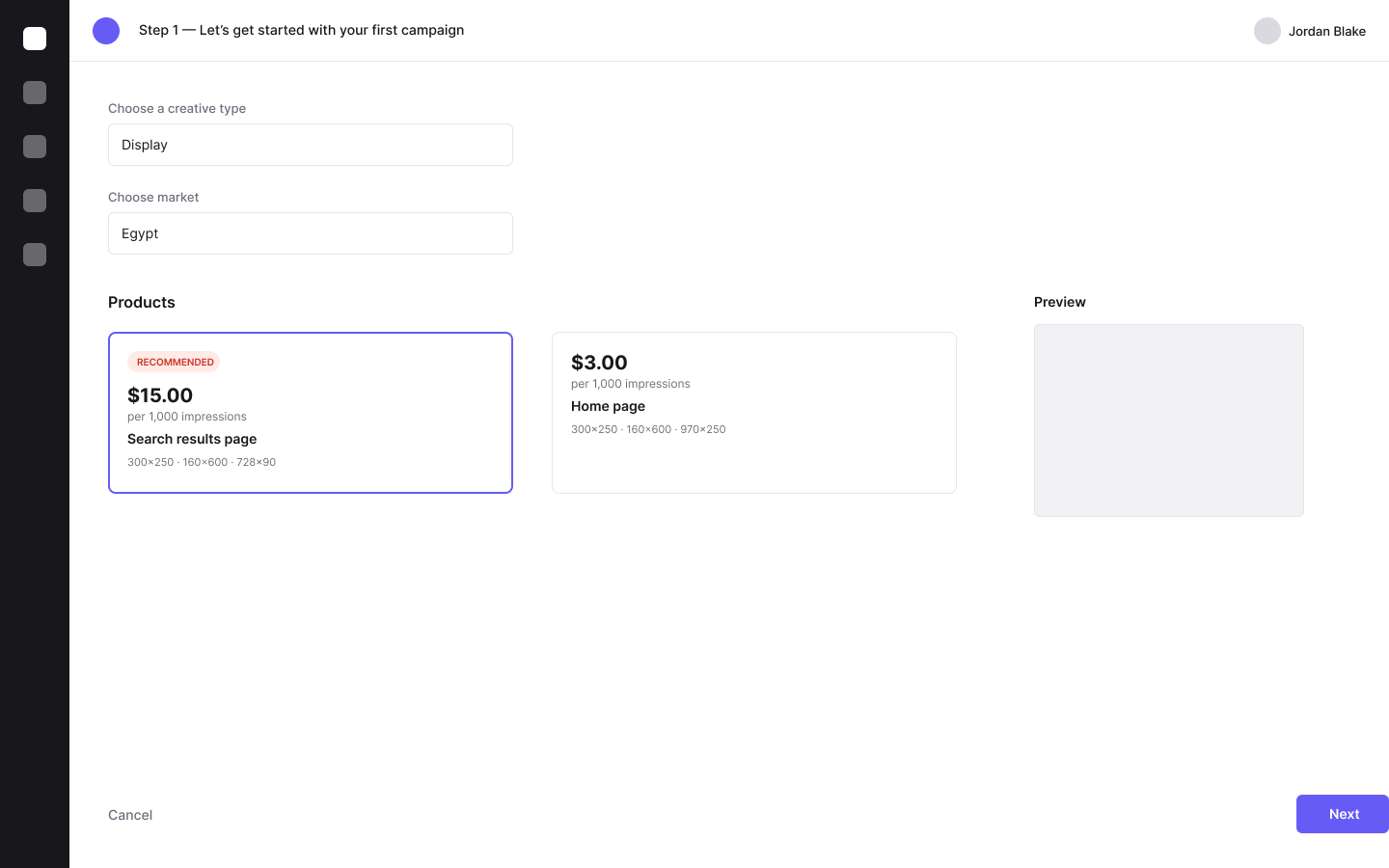
Choose your channel and placement—specify the objective, to get visitors, sales or brand awareness.
Budget
Choose your budget. This determines how many impressions get served.
Audience
Target your audience with a range of options, so campaigns reach the right people.
Creatives
Upload your creatives with a simple tool, or bring an existing design.
Launch
Pay and launch through a built-in checkout, by card or by invoice.
03 · My role
Leading design coherence across a core platform and three markets.
As UX/UI Design Lead, I set direction and stayed hands-on across research, UX and UI. I owned the design system, workflow and delivery while coordinating a design team across concurrent client deployments.
- Direct
Vision & design system
Set the UX/UI vision for the platform and built its scalable design-system foundations, including WCAG accessibility standards.
- Research
Market & cultural research
Ran stakeholder interviews and cultural-context research for each market, including right-to-left conventions and local trust signals.
- Design
Key flows
Designed the campaign-creation wizard, publisher dashboard, payment and reporting flows.
- Lead
Team & delivery
Managed the design team, reviewed and mentored, and coordinated closely with product owners and developers.
- Scale
Motion & systemisation
Introduced a lightweight motion layer and kept the design system consistent as it scaled to new client deployments.
04 · Product process
The platform stayed the same. The market context never did.
Stakeholder interviews and cultural research shaped every new deployment—reading direction, payment habits and the tone that signals trust shift by market, even when the underlying workflow doesn’t.
Under my direction, the design system grew from a single implementation into a true white-label foundation: one core, three distinct market-ready deployments.
How do you launch the same self-serve platform in a new market without redesigning it from scratch?
Keep one core design system, and localise research, copy tone and trust signals per deployment.
How does a small design team support several concurrent client deployments at once?
05 · Product experience
Designed around the work—not around a feature catalogue.
Campaign wizard
A five-step guided flow—placement, budget, audience, creatives, payment—for advertisers with no campaign experience.
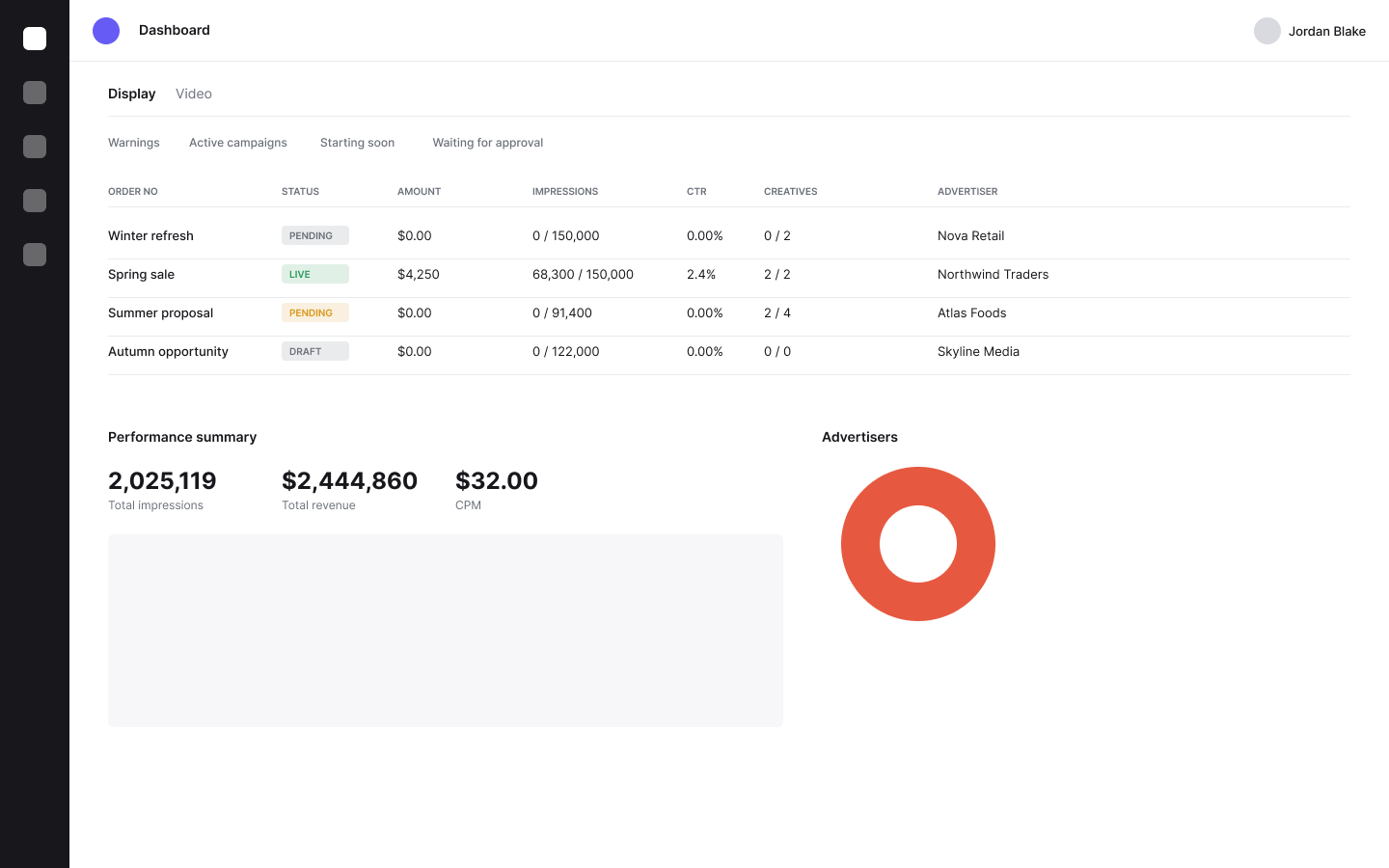
Publisher dashboard
An overview of every campaign’s status, budget spent, impressions and clicks at a glance.
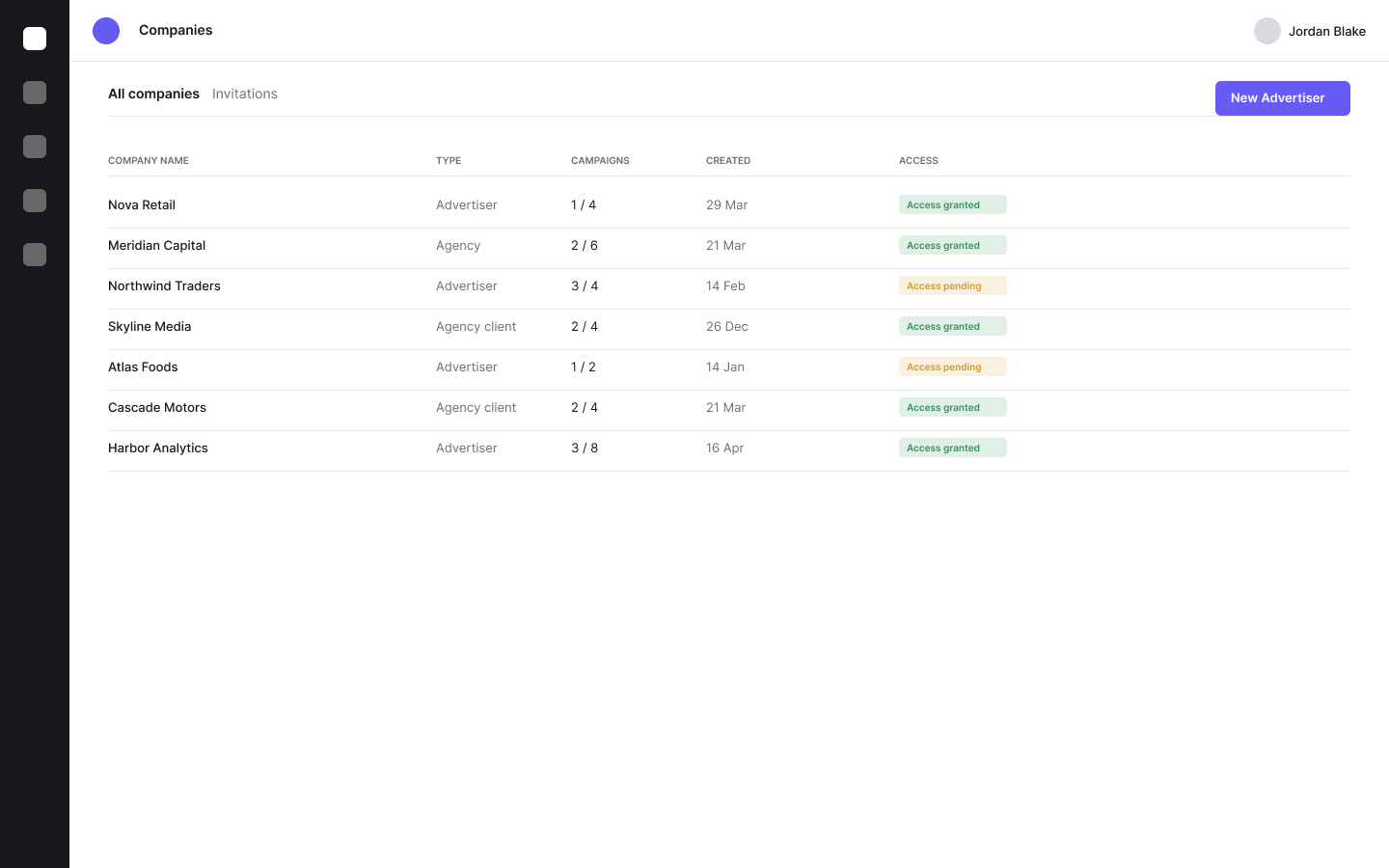
Companies & invitations
Publisher-side tools for managing advertiser and agency accounts, invitations and access levels.
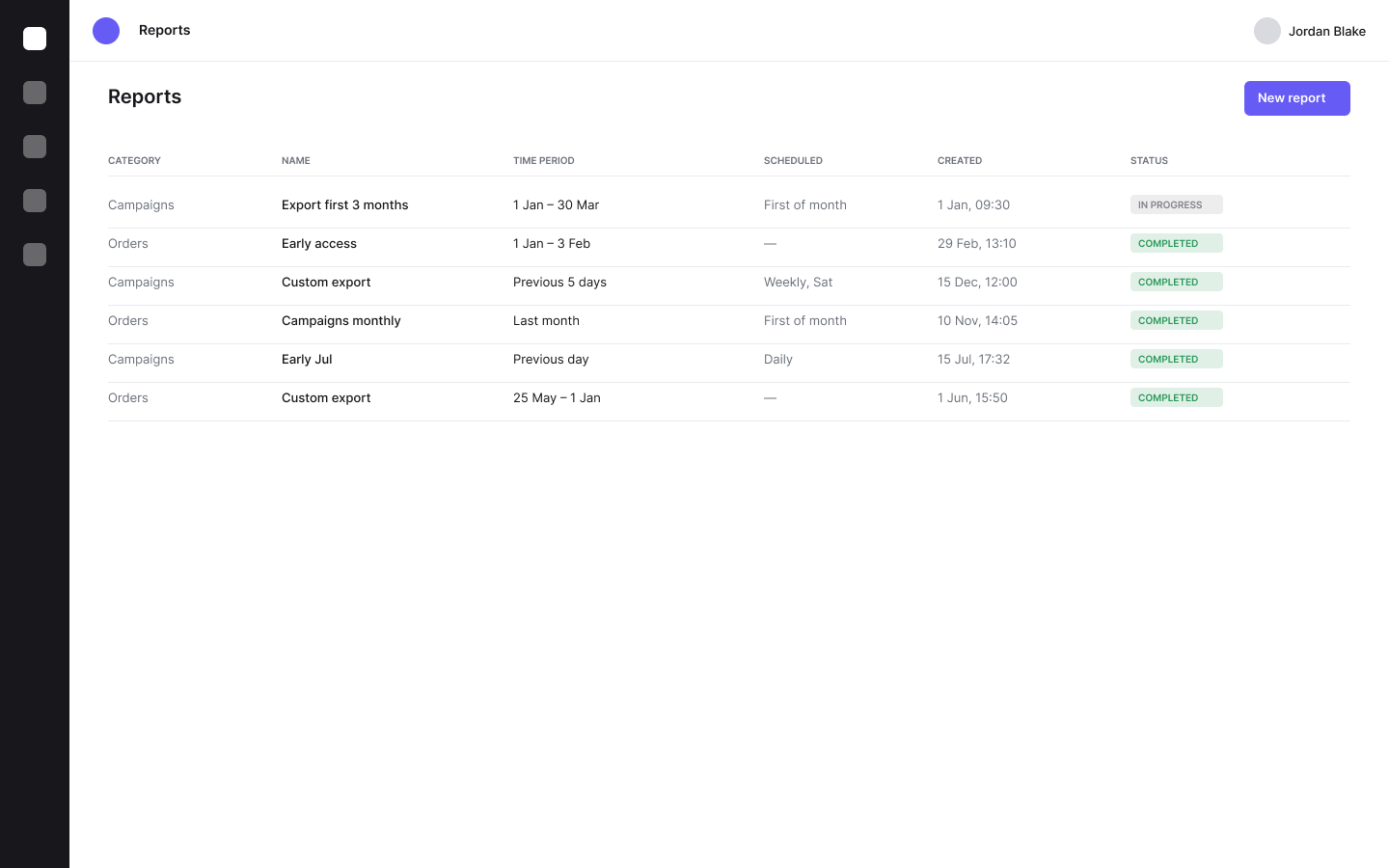
Reporting & orders
Scheduled or one-time exports, plus order history with payment status and method.
06 · Evidence and outcomes
A complete product system—not a pitch-deck prototype.
- Design system evidence
40%+ faster customisation
Client-specific customisation time was reduced by more than 40%—across both design and development—after the new design system and workflow shipped.
- Shipped scope
3 client deployments
The core platform and campaign wizard were adapted and shipped for three distinct client contexts within an eleven-month engagement.
- Team scale
Design team led end-to-end
Research, UX, UI and motion design were coordinated as one design team across concurrent client deployments.
The strongest outcome was not one deployment. It was a design system that could absorb a new market without losing what made it trustworthy in the last one.
07 · What this demonstrates
Design systems that travel.
Cultural fluency
Designing across markets, not just languages—right-to-left conventions, payment habits and trust signals shift by market even when the underlying workflow doesn’t.
Systemisation at scale
Turning one implementation into a true white-label foundation that stayed consistent while it was re-skinned for new clients.
Motion as usability
Using a lightweight motion layer to guide users and make a multi-step campaign wizard feel lighter, not more complex.